Livestock production in South Africa contributes substantially to food security. It is also a topic of public debate because of lack of knowledge and wrong information. This article aims to provide information on the worth and impact of the livestock sector; information and statistics providing a baseline to guiding sustainability towards 2050. Seventy percent of agricultural land in South Africa can be utilized only by livestock and game and species are found in all provinces with high concentrations in the eastern higher rainfall regions.

How does LCS Work?
How does the Livestock Counting System work?
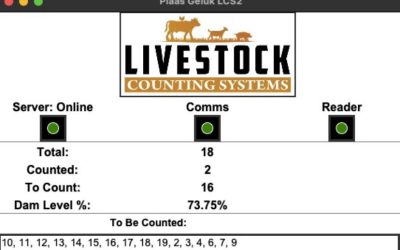
The crucial task of livestock counting can now be performed electronically, supported by a custom-designed computer program to manage livestock movement effectively.
A Livestock Counting System consists of four different parts:
1. The power supply.
2. The computer and communication module.
3. The readers.
4. The UHF RFID tags.
Each animal is equipped with a UHF RFID tag attached to its ear. When the animal moves in close proximity to the readers, the tag is being read and registered by the readers and a report is created.
Application and Models
The Livestock Counting System can be used in three different ways i.e.
1. A portable fixed installation at the entrance to a water yard;
2. A fixed installation over a drinking trough;
3. A mobile unit.
The design of hardware as well as software for above-mentioned models is exactly the same.
The Tags
We use Long Range UHF tags (860Mhz – 960Mhz). The main reasons for choosing these specific tags are:
1. The tags can be read up to a distance of 3m – 3.5;
2. The tags are reusable from one animal to the next;
3. Each tag has got its own specific serial number. These serial number are permanent and cannot be altered.
4. The tags can be printed either on side or both sides.
Reporting
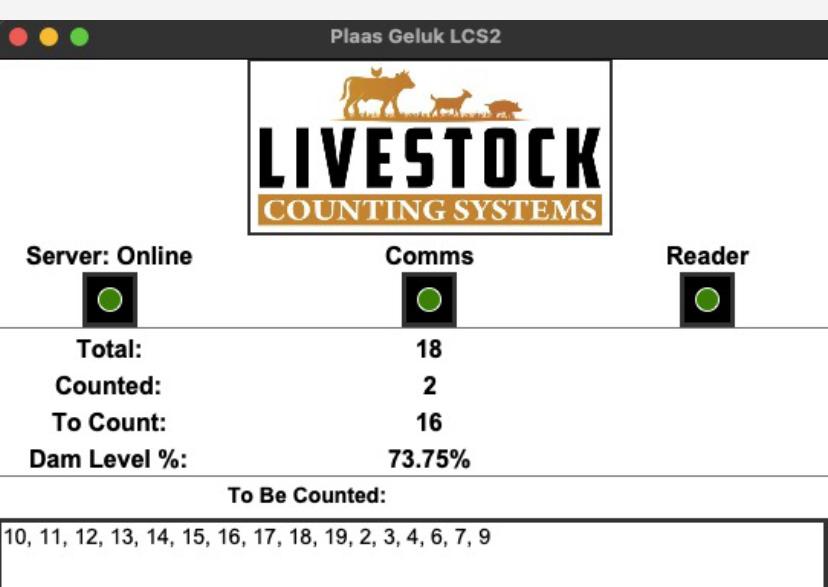
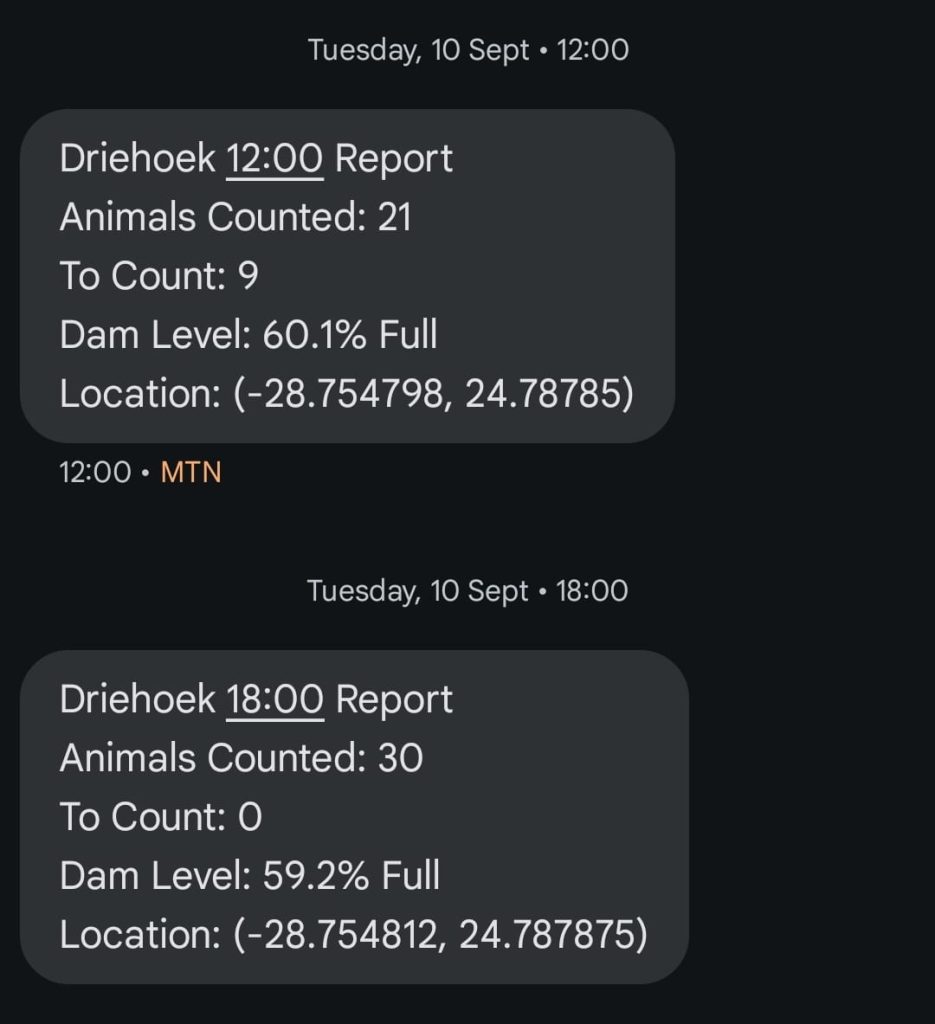
Reports can be delivered either as (a) “real time updates” or (b) an SMS.
With the former, updates are constant and an updated report is delivered every 30 seconds, while in the case of the SMS, the user can choose on the frequency of and time of reporting.

Sustainability of the South African Livestock Sector towards 2050.
read more
Advantages of installing the Livestock Counting System
Discover on our blog the advantages of our cutting-edge Livestock Counting System for cattle farmers. The true practical value of this system becomes evident when considering its various applications.
How does LCS Work?
Discover on our blog the functionality of our cutting-edge Livestock Counting System. This essential process of counting livestock is now automated, utilizing a specially developed software to efficiently oversee livestock movement.